
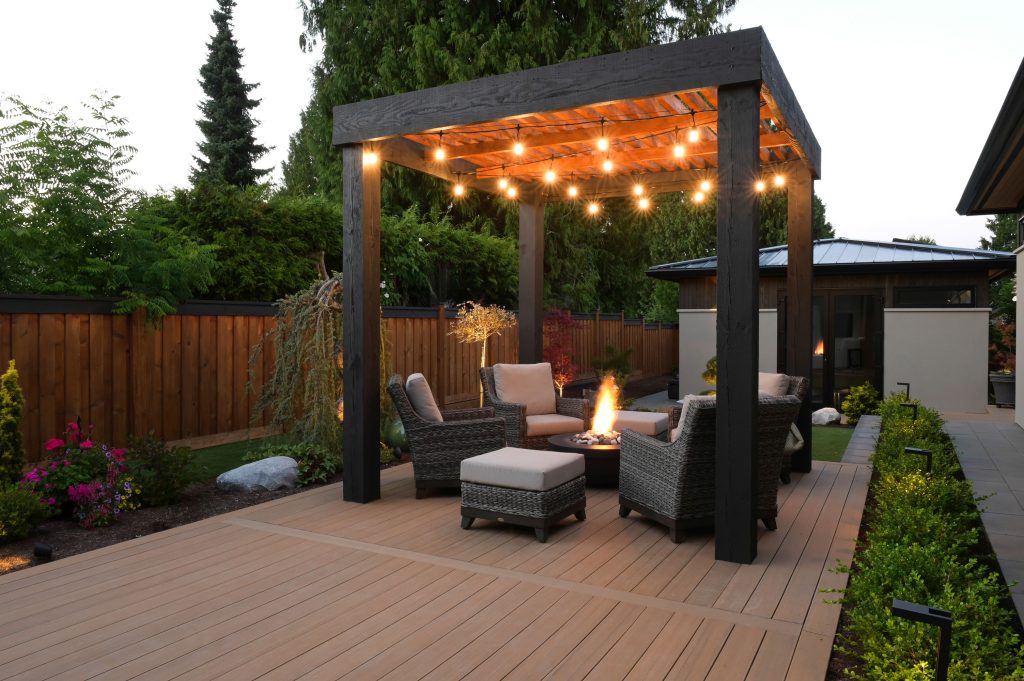
One of the biggest decisions homeowners face when planning a new deck is whether to choose composite decking or traditional wood.
It’s a question we answer regularly, and the reality is there isn’t a one size fits all answer.
Both materials have their advantages. The right choice depends on your budget, how much maintenance you’re comfortable with, the style of your home, and how you plan to use your outdoor space.
This guide will explain the differences between composite decking and wood so you can make the right decision for your home.
Appearance
Both wood and composite decking can create a beautiful outdoor living space.
Natural wood has a warmth and character that many homeowners appreciate. Every board has its own grain and colour variation, giving the deck a unique appearance.
Composite decking has come a long way over the past decade. Today’s premium products closely resemble natural wood while offering a cleaner, more consistent finish. They are available in a wide variety of colours and styles, allowing homeowners to match almost any home design.
For homeowners looking for a modern, low maintenance outdoor living space, composite decking has become an increasingly popular choice.
Maintenance
This is where the two products differ the most.
A wood deck requires ongoing maintenance to keep it looking its best. Depending on the material and exposure to the elements, this may include cleaning, staining, sealing, and replacing damaged boards over time.
Composite decking requires very little maintenance beyond occasional cleaning with soap and water.
If your goal is spending weekends enjoying your deck instead of maintaining it, composite decking has a clear advantage.
Durability
British Columbia’s climate can be hard on outdoor materials.
Rain, moisture, UV exposure, and seasonal temperature changes all take their toll.
Wood expands and contracts naturally with moisture and can eventually crack, split, warp, or rot if it is not properly maintained.
Composite decking is designed to resist moisture, fading, insects, and rot. While no material is completely maintenance free, composite decking generally performs very well in our West Coast climate.
Cost
Pressure treated lumber is typically the most affordable option for a new deck.
Cedar generally costs more than pressure treated lumber.
Premium composite decking usually has the highest upfront investment.
However, it’s important to look beyond the initial construction cost.
Wood requires regular maintenance throughout its life, while composite decking has significantly lower ongoing maintenance costs.
For many homeowners, those long term savings help offset the higher initial investment.
Lifespan
A properly built wood deck can last for many years when maintained regularly.
Composite decking is designed to provide decades of performance with very little maintenance.
The lifespan of either product depends just as much on the quality of the framing and construction as it does on the decking material itself.
A poorly built deck using premium materials will never outperform a well built deck using quality materials.
Environmental Considerations
Many composite decking products are manufactured using recycled materials, making them an attractive option for environmentally conscious homeowners.
Wood is a renewable natural resource, but its long term environmental impact depends on how it is harvested, treated, and maintained.
Both options can be environmentally responsible when sourced from reputable manufacturers.
Which Material Would We Choose?
At Coastal Shores, we build both wood and composite decks, so our recommendation depends on the homeowner’s priorities.
If budget is the primary concern and you’re comfortable with ongoing maintenance, a well built wood deck can be an excellent choice.
If you’re looking for a premium outdoor living space with minimal maintenance and long term durability, we believe composite decking offers the better overall investment.
That’s why many of our clients choose products such as Trex and TimberTech for their outdoor living spaces.
Final Thoughts
There is no single material that’s right for every homeowner.
The best deck is the one that fits your lifestyle, complements your home, and is built properly from the ground up.
Whether you choose wood or composite, proper framing, quality craftsmanship, and attention to detail will have just as much impact on the finished product as the decking itself.
A beautiful deck isn’t defined only by the boards you see on the surface. It’s built on a solid structure that allows your family to enjoy it for many years to come.