
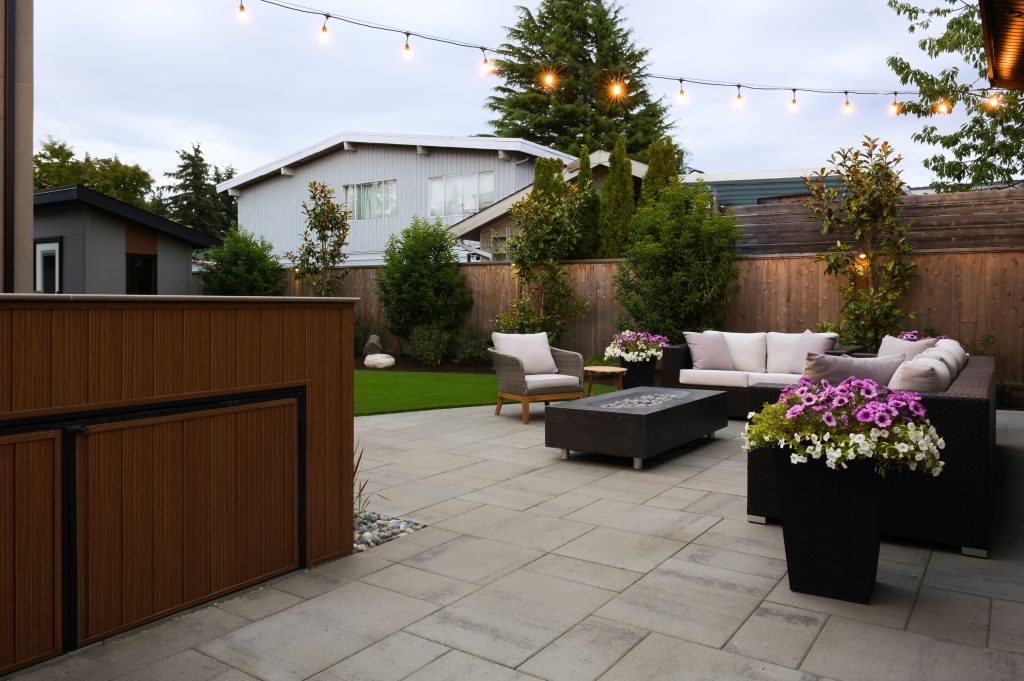
One of the most common questions we hear from homeowners is:
“Should we install paving stones or pour concrete?”
The answer isn’t as simple as saying one is better than the other.
Both have their place, but they perform very differently over time. The right choice depends on your budget, how you plan to use the space, the look you’re trying to achieve, and how much maintenance you’re willing to do.
At Coastal Shores, we’ve installed countless paver projects and have seen what happens to both materials after years of exposure to our West Coast climate. This guide will help you understand the differences so you can make the right decision for your home.
Appearance
If your goal is creating a premium outdoor living space, pavers offer significantly more design flexibility.
They are available in a wide variety of colours, sizes, textures, and laying patterns, allowing for a custom look that complements your home.
Concrete, while clean and functional, offers fewer design options. Decorative finishes such as exposed aggregate or stamped concrete can improve its appearance, but they still don’t provide the same level of customization as paving stones.
For homeowners looking to create a high end backyard or front entrance, pavers generally provide a more refined finish.
Durability
Both materials are durable when installed correctly, but they perform differently over time.
Concrete is poured as one continuous slab. As it cures and experiences seasonal movement, cracking is common. Control joints help manage where those cracks occur, but they don’t eliminate them.
Pavers are individual units installed over a properly prepared base. Because each paver can move slightly with seasonal expansion and contraction, the surface is more forgiving and less prone to large visible cracks.
If a section ever settles, individual pavers can usually be lifted, the base corrected, and the area reinstalled without replacing the entire surface.
Repairs
This is one of the biggest advantages of paving stones.
If underground utilities need repair or tree roots cause movement, individual pavers can often be removed and reinstalled after the repair is complete.
With concrete, repairs usually involve cutting and replacing sections of the slab. Even when done well, colour variations between old and new concrete are often noticeable.
Maintenance
Every outdoor surface requires some maintenance.
Concrete may eventually develop cracks, surface staining, or discolouration.
Pavers may require occasional joint sand replacement and, depending on the product, periodic cleaning or sealing.
Neither option is maintenance free, but both can last for decades when properly installed and cared for.
Cost
Concrete generally has a lower upfront cost than paving stones.
Pavers require more labour because each unit is installed individually over a carefully prepared base.
However, the initial installation cost is only one part of the equation.
When considering long term ownership, repairability, appearance, and longevity, many homeowners feel the additional investment in pavers provides greater value.
Which Adds More Value?
Both materials can improve curb appeal.
However, premium paver installations often create a stronger first impression and better complement higher end homes.
If you’re investing in an outdoor living space designed to increase both enjoyment and long term value, pavers are often the preferred choice.
What Would We Choose?
If our goal was simply creating a functional walkway at the lowest possible cost, concrete may be the right solution.
If we were building an outdoor living space where family and friends would gather for years to come, we would choose paving stones every time.
Their appearance, flexibility, repairability, and long term performance make them an investment that continues to add value long after the project is complete.
Final Thoughts
There isn’t a universal right answer.
The best material depends on your priorities, your budget, and how you plan to use the space.
At Coastal Shores, we help homeowners weigh the pros and cons of each option so they can make an informed decision based on their property rather than choosing solely on price.
A well designed outdoor space starts with making the right decisions from the beginning.