
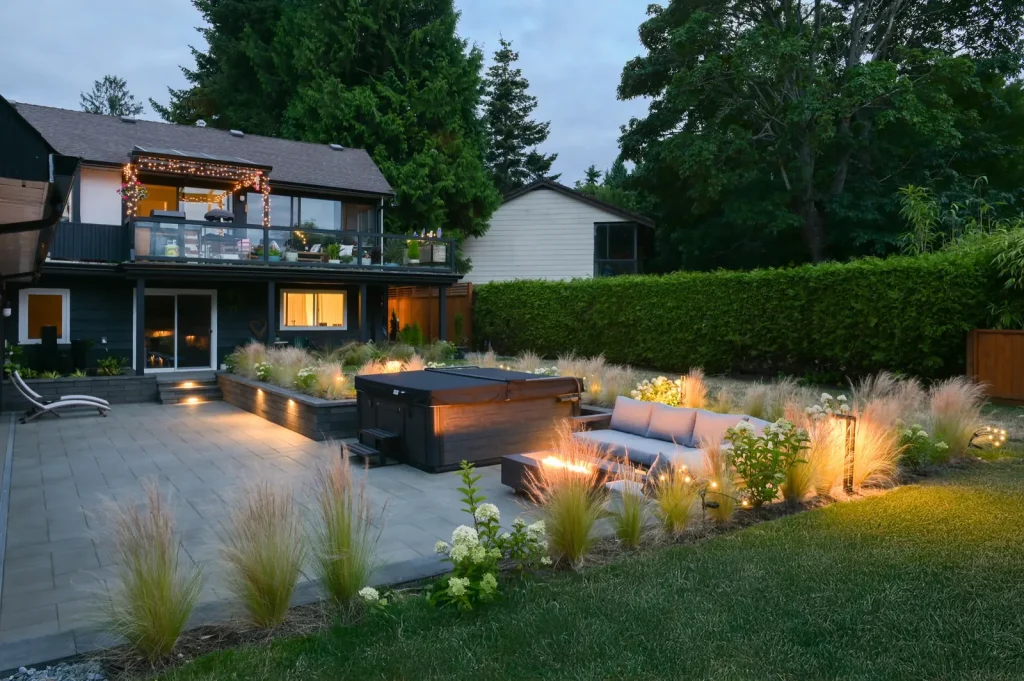
A backyard can feel like a completely different space after sunset.
The patio that was welcoming during the day may become difficult to use. Steps can be harder to recognize, and the garden beyond the windows may disappear into darkness.
Thoughtful landscape lighting can help make outdoor areas more comfortable to navigate and enjoyable to spend time in.
The starting point is deciding what needs light and what purpose that light should serve.
Begin with the Routes People Use
Start by considering how people move between the house, driveway, gates and outdoor gathering areas.
Steps, changes in elevation and important junctions deserve particular attention.
The aim is to help people recognize the route and the surface beneath them. Fixtures should be positioned so their light is useful without shining directly into someone’s eyes.
Placement matters more than simply installing a large number of lights.
Give Steps and Level Changes Careful Attention
Changes in elevation can be easy to overlook once daylight fades.
Lighting near steps should help reveal their edges and the relationship between one level and the next.
This may involve fixtures integrated into walls or steps, or another approach suited to the construction.
The surrounding light levels matter as well. A brightly lit area beside a dark step can make the transition uncomfortable to navigate.
Considering the whole route helps create a more consistent result.
Make Gathering Areas Comfortable
Dining and lounge areas need lighting that suits the way they will be used.
A dining table may benefit from light that allows people to see their meals and one another comfortably. A lounge area may feel better with softer light from nearby features.
Neither needs to be flooded with brightness.
The position of furniture should be considered when locating fixtures so guests are not seated facing exposed lamps or glare.
Lighting should support the atmosphere you want to create.
Choose a Few Garden Features to Highlight
A tree, a textured wall or a carefully selected group of plants can provide a focal point after dark.
Choosing a few features gives the eye somewhere to rest and helps the garden retain a sense of depth.
Lighting every plant and surface can make the scene feel busy. Some areas of darkness help illuminated features stand out.
The most effective choices depend on the views from the patio, walkways and inside the home.
Consider the View Through Your Windows
Landscape lighting can contribute to how a home feels indoors, too.
A garden feature visible through a window may provide an evening view beyond the glass.
It is worth considering which parts of the landscape are seen most often from living rooms, dining areas and other occupied spaces.
Careful fixture placement helps keep the light on the landscape rather than directing it toward windows.
Keep Glare Under Control
A bright fixture is not necessarily providing useful illumination.
If the lamp itself dominates your view, it can become distracting and make the surrounding area harder to appreciate.
Shielding, fixture position and aiming all influence the result.
A well-considered installation lets you notice the path, planting or wall being illuminated without making the light source the centre of attention.
Respect Neighbours and the Nighttime Setting
Outdoor lighting should be directed where it is needed.
Avoid unnecessary spill toward neighbouring windows or across property boundaries. Brightness, aiming and operating hours should suit the setting.
Timers and other appropriate controls can help ensure the system operates when it is useful rather than remaining on unnecessarily.
Local requirements should also be considered when planning the installation.
Choose a Consistent Appearance
Light colour affects the atmosphere of an outdoor space.
A considered, consistent approach can help patios, pathways and planting feel connected. Mixing noticeably different light colours without a clear purpose may create a disjointed result.
The choice should complement the materials, planting and mood of the landscape.
Where possible, assess fixtures in the actual setting rather than choosing solely from a product photograph.
Plan the Infrastructure During Construction
The best time to consider lighting is while the landscape is being designed.
Wiring routes, suitable sleeves beneath paving and access to system components can be planned before finished surfaces are installed.
This can also make future additions easier where they have been anticipated.
The installation needs to use equipment suited to the outdoor conditions and meet applicable electrical requirements, with qualified trades involved where required.
Allow for Adjustment After Dark
The effect of landscape lighting is best assessed at night.
Once fixtures are installed, their direction and brightness may need adjustment. A beam that looks well positioned during the day can appear quite different after sunset.
Plant growth can also change the effect over time. Fixtures may need repositioning or adjustment as the garden matures.
A lighting system benefits from occasional review, along with routine cleaning and maintenance.
Let Lighting Complete the Landscape
Thoughtful lighting helps connect the practical and visual parts of a backyard.
It can reveal a route, make a gathering area more inviting and bring selected features into view after sunset.
The goal is an outdoor space that feels comfortable and considered in the evening as well as during the day.
At Coastal Shores Landscape Construction, we incorporate lighting into the wider landscape plan so it works with patios, pathways, walls and planting.
If you’re planning an outdoor living project in Tsawwassen, Ladner, South Surrey or White Rock, we’d be happy to discuss how lighting could help you enjoy your space after dark.