
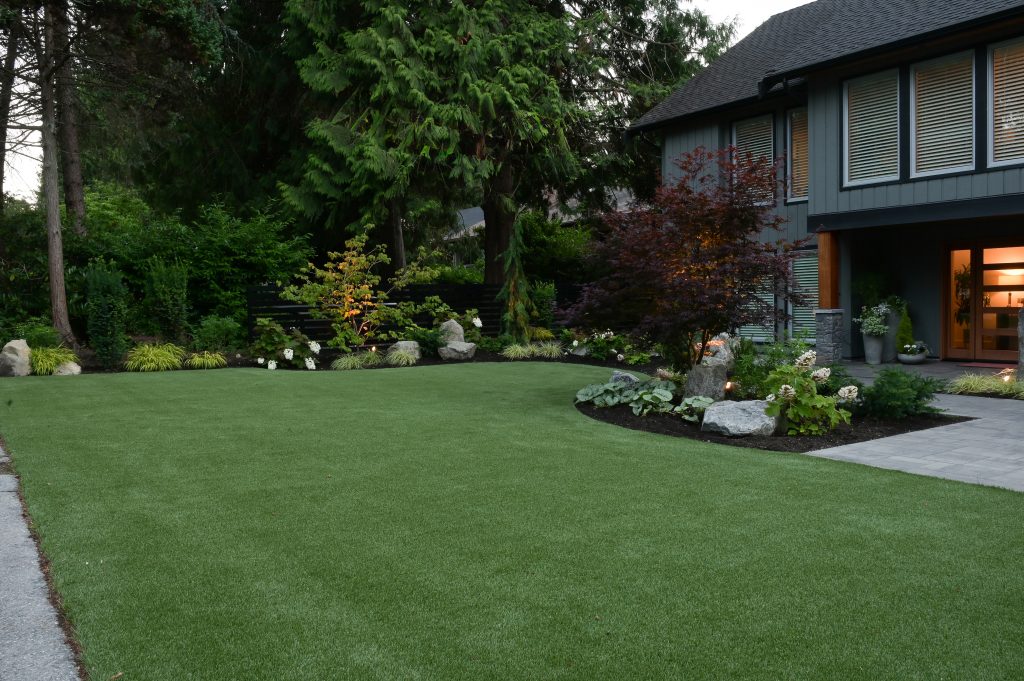
When planning a backyard renovation, most homeowners naturally focus on what they’ll see: the paving stones, gardens, lighting and spaces where family and friends will gather.
One of the most important decisions, however, is far less noticeable.
Where will the water go when it rains?
The elevations of your patio, walkways, lawn and garden beds influence how water moves through your property. Getting those elevations right helps protect your home and creates an outdoor space that performs well through our wet West Coast seasons.
What Is Landscape Grading?
Grading means shaping the ground to establish its height and slope.
A properly graded landscape gives surface water a planned route away from the house and toward an appropriate drainage destination. Poor grading can send water toward the foundation or trap it in low areas.
The difference may be difficult to see on a dry summer afternoon. During steady rainfall, it becomes much more apparent.
That is why drainage needs to be considered when the layout and elevations are being planned—before paving stones are installed or gardens are planted.
A Patio Should Feel Level Without Being Perfectly Flat
Homeowners understandably want a patio that feels comfortable for dining, relaxing and entertaining.
But a comfortable patio and a perfectly flat patio are not the same thing.
Most conventional paved surfaces need a gentle, deliberate slope so rainwater can leave the surface. Near the home, the layout should direct water away from the building rather than toward doors, walls or the foundation.
The appropriate slope depends on the surface material, site conditions and drainage design. It should be established through measurements during construction, rather than judged by eye.
A well-built patio can feel comfortable underfoot while still moving water in the right direction.
Water Needs Somewhere to Go
Sloping a patio away from the house is only part of the solution.
What happens when the water reaches the edge?
If it flows into a trapped garden bed or a low section of lawn, the problem has simply moved. A complete drainage plan considers the entire route: where water comes from, how it crosses the property and where it can safely discharge.
Depending on the site, that may involve grading, shallow landscaped channels called swales, catch basins or other drainage systems.
The destination matters just as much as the slope. Runoff should be managed without creating problems for neighbouring properties.
Patios, Lawns and Garden Beds Need to Work Together
Each part of a landscape affects the areas around it.
A raised garden bed can interrupt an existing drainage route. Lawn installed too high beside a patio can hold water against the paving. A new retaining wall can change how water moves across the yard.
These features should be planned together.
Before construction begins, the finished elevations need to account for the house, doorways, existing structures, neighbouring grades and the proposed landscape.
The goal is a connected outdoor space where the finished surfaces and drainage systems support one another.
Raising the Ground Beside the House Is Not Always the Answer
When water collects near a home, adding soil may seem like an easy fix.
However, raising soil, mulch or paving against the building can create other problems if it reduces necessary clearances or covers parts of the exterior that should remain exposed.
The relationship between the finished landscape and the building needs careful attention, particularly around siding, vents, windows and door thresholds.
Correcting drainage means finding a workable solution for the property while respecting those building details.
What If the Yard Slopes Toward the House?
Some properties naturally fall toward the home. Others have narrow side yards or existing elevations that limit how much the ground can be reshaped.
These situations require a more deliberate approach.
The solution may involve intercepting water before it reaches the building, adjusting selected elevations or incorporating a drainage channel or collection point.
Simply adding a drain without understanding the surrounding grades may leave part of the problem unresolved. The drain needs to collect the water effectively and connect to a suitable discharge route.
Every property has different constraints, so the design should follow a site assessment.
Underground Drainage Does Not Replace Good Surface Grading
Surface grading and underground drainage have different jobs.
Grading helps manage water travelling over patios, lawns and garden beds. Underground systems manage water collected or encountered below the surface.
A property may need both.
Installing drainage pipe does not automatically correct a patio that slopes toward the house. Likewise, reshaping the lawn will not necessarily resolve an existing foundation drainage problem.
Understanding the source and movement of the water helps determine which work is actually needed.
Plan for Drainage Before Choosing the Finishes
The best time to resolve grading is before the finished landscape is installed.
During planning, useful questions include:
- Will the patio and walkways direct water away from the house?
- Where will runoff go after it leaves those surfaces?
- Will new walls or garden beds interrupt that route?
- How will roof runoff interact with the landscape?
- Are the finished elevations appropriate around doors and exterior walls?
- Can drainage features be accessed for cleaning and maintenance?
Resolving these details early helps avoid lifting new paving stones or rebuilding completed areas later.
A Beautiful Landscape Should Work in the Rain, Too
A successful outdoor space needs to do more than photograph well.
It should remain comfortable to use, manage rainfall effectively and work with the home it surrounds.
At Coastal Shores Landscape Construction, we consider grading and drainage as part of the overall project—from the first elevations through to the finished patio, pathways and planting.
If you’re planning a landscape renovation in Tsawwassen, Ladner, South Surrey or White Rock, we’d be happy to discuss how to create an outdoor space that looks beautiful and manages water thoughtfully.